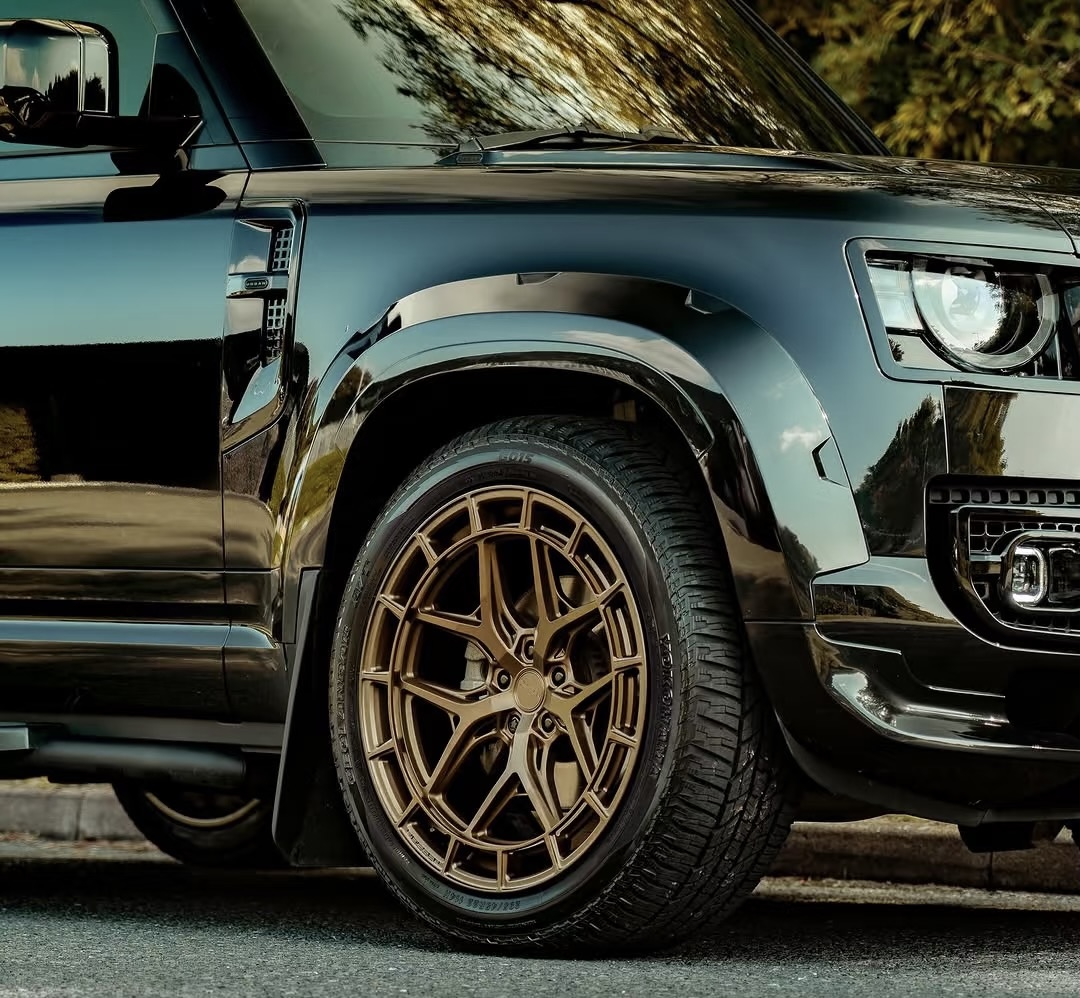
Sports Car Wheels: Performance, Engineering, and What Makes the Difference
Sports Car Wheels: Performance, Engineering, and What Makes the Difference
When it comes to high-performance driving, every single detail matters. You can tune your engine to push massive horsepower and upgrade your suspension for razor-sharp cornering, but all that engineering means nothing if it cannot effectively transfer to the asphalt. That is where your sports car wheels come into play.
Upgrading your wheels is one of the most impactful modifications you can make to a vehicle. It is not just about turning heads at a local Cars & Coffee; it is about altering how your car accelerates, brakes, and corners.
In this comprehensive handbook, we will break down the science, engineering, and aesthetics of high-performance wheels to help you make an informed decision for your build.
1.Why Sports Car Wheels Matter: The Science of Unsprung Mass
To understand why premium sports car wheels are worth the investment, we have to look at a fundamental concept in automotive engineering: unsprung mass (or unsprung weight).
What is Unsprung Mass?
In simple terms, vehicle weight is divided into two categories:
-
Sprung Mass: Everything supported by the car’s suspension (the chassis, engine, body panels, interior, and passengers).
-
Unsprung Mass: Everything not supported by the suspension (the wheels, tires, brake assemblies, wheel bearings, and structural suspension arms).
The Performance Impact of Reducing Wheel Weight
When you install lightweight aftermarket wheels, you are reducing unsprung mass and rotational inertia. Because the wheels do not have to move up and down with the suspension while simultaneously spinning to accelerate the car, reducing their weight yields massive performance benefits:
-
Sharper Throttle Response: A lighter wheel requires less kinetic energy to spin. This means your engine spends less effort turning the wheel and more effort pushing you back into your seat.
-
Enhanced Braking Efficiency: Just as lighter wheels are easier to accelerate, they are also much easier for your brake pads and rotors to bring to a stop.
-
Superior Suspension Tracking: When a heavy wheel hits a bump, its momentum forces it upward, momentarily reducing tire contact with the road. A lightweight wheel allows the dampers and springs to react instantly, keeping the tire contact patch firmly glued to the pavement.
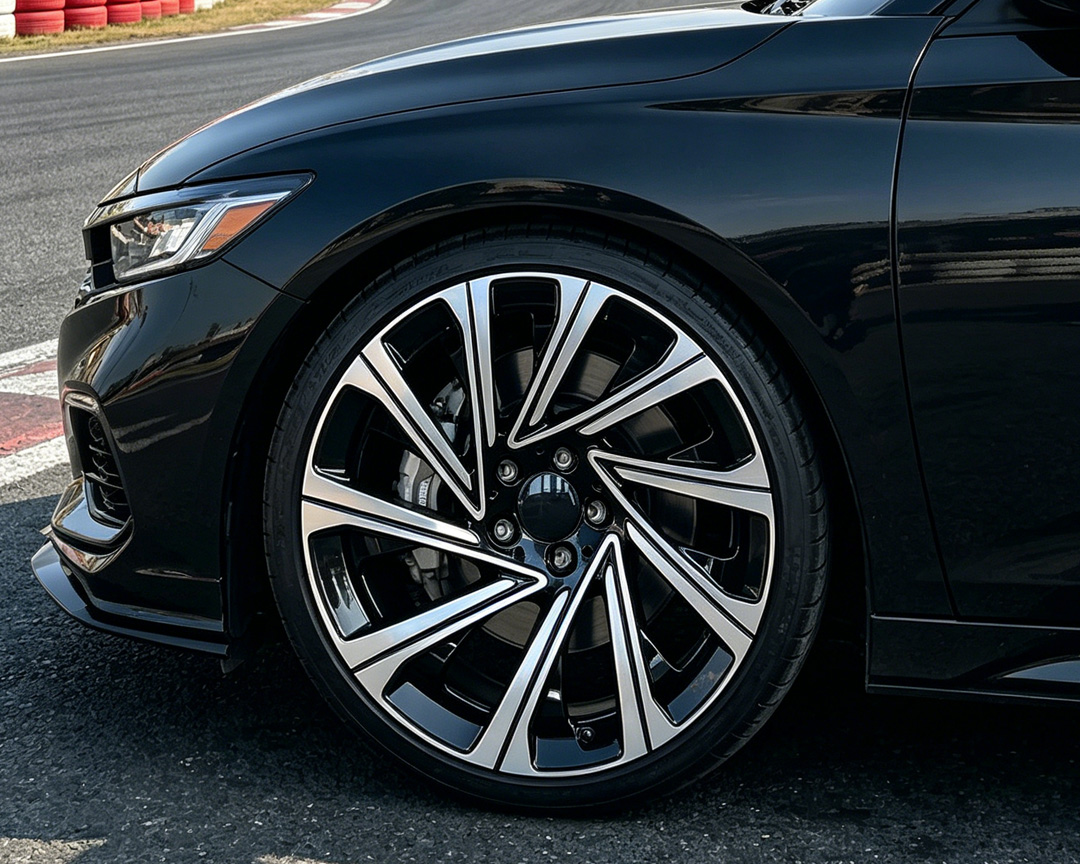
2.Manufacturing Methods: Forged vs. Cast vs. Flow-Formed
The way a wheel is manufactured directly dictates its strength, weight, price, and durability. If you are tracking your car or driving spiritedly on canyon roads, understanding these structural differences is critical.
1. Cast Wheels
Gravity casting or low-pressure casting involves pouring molten aluminum into a pre-made mold. Once the metal cools, it is machined into its final shape.
-
Pros: Highly affordable; wide variety of designs available.
-
Cons: Heavier structural profile; more brittle under high stress; prone to cracking under severe impact rather than bending.
2. Flow-Formed Wheels (Rotary Forged)
Flow-forming is a hybrid process. It starts as a specialized low-pressure cast wheel that is placed on a proprietary machine that spins the barrel while applying extreme pressure via hydraulic rollers. This stretches and compresses the aluminum, changing its molecular structure.
-
Pros: Significantly lighter and stronger than standard cast wheels; excellent middle-ground price point.
-
Cons: The face of the wheel remains cast, meaning only the barrel receives the increased structural strength.
3. Forged Wheels
Forged wheels represent the absolute pinnacle of wheel manufacturing. They are crafted by taking a solid billet of aerospace-grade 6061-T6 aluminum and subjecting it to intense intense pressure (often up to 10,000 tons) to forge it into shape. The wheel is then CNC-machined to its final aesthetic design.
-
Pros: Exceptionally lightweight; maximum structural density; high fatigue resistance; will bend rather than shatter under extreme stress.
-
Cons: High premium price tag due to intense labor and tooling costs.
Quick Comparison: Wheel Manufacturing Technologies
| Feature | Cast Wheels | Flow-Formed Wheels | Forged Wheels |
|---|---|---|---|
| Manufacturing Process | Molten aluminum poured into a mold | Cast face with hydraulically rolled barrel | Solid aluminum block compressed under high pressure |
| Structural Strength | Low to Moderate | Moderate to High | Maximum |
| Weight | Heavy | Moderate / Lightweight | Ultra-Lightweight |
| Impact Behavior | Prone to cracking/shattering | May bend or crack under high stress | Bends safely under extreme impact |
| Average Cost | ($150 - $400 per wheel) | ($300 - $600 per wheel) | ($800 - $2,500+ per wheel) |
3.Wheel Sizing: Why Sports Cars Lean Toward Larger Diameters
Look at any modern performance vehicle—from a Porsche 911 to a Chevrolet Corvette—and you will notice the wheels are significantly larger than those on a standard commuter sedan or crossover. This design choice is rooted deeply in functional engineering.
Accommodating Massive Brake Systems
As engines get more powerful, cars need equal stopping power. Modern sports cars utilize large multi-piston calipers and oversized carbon-ceramic or steel brake rotors. A standard 16-inch or 17-inch wheel simply will not clear these braking components. Upgrading to 19-inch, 20-inch, or even 21-inch diameters provides the internal clearance necessary for heavy-duty braking setups.
Low-Profile Tires and Lateral Grip
Larger wheels allow drivers to run low-profile tires (tires with short, stiff sidewalls). When you dive into a sharp corner at high speeds, a tall tire sidewall will flex and roll over, leading to vague steering response and a loss of traction.
Short, stiff sidewalls minimize this deflection, providing:
-
Immediate steering wheel feedback.
-
Increased lateral stability during high-G cornering.
-
A wider tire contact patch on the pavement.
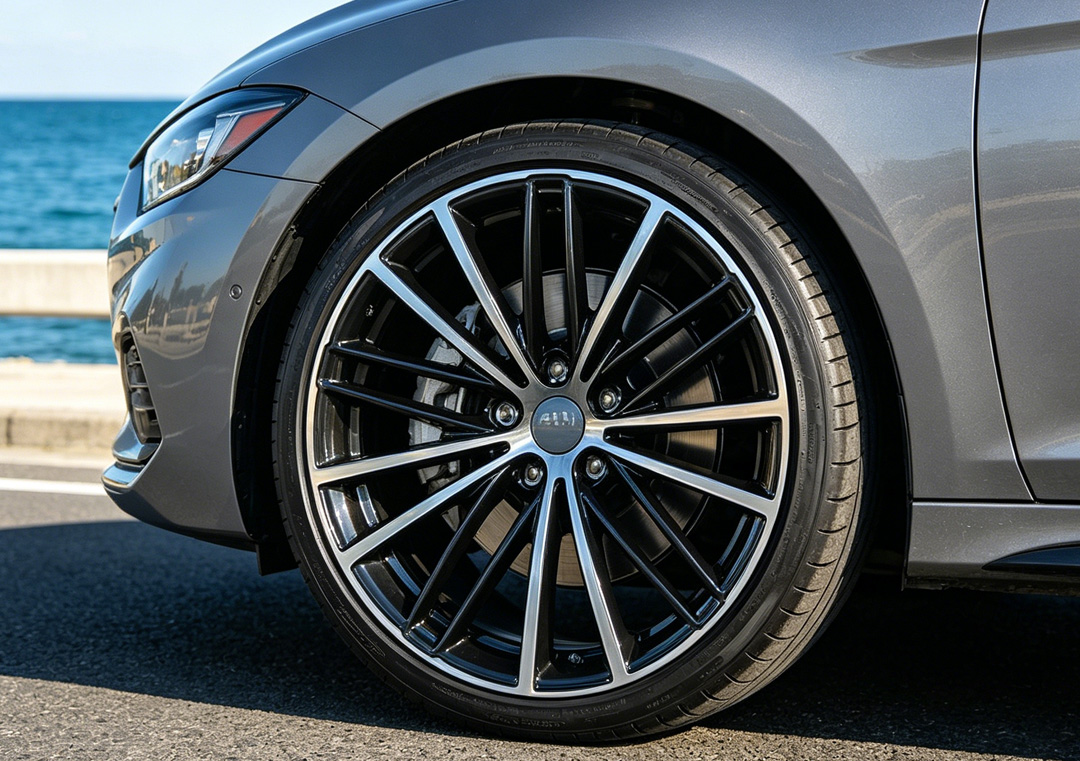
4.Staggered vs. Square Wheel Setups
When setting up your sports car wheels, you must choose between a square configuration or a staggered configuration. Your choice will dramatically change how your vehicle handles at its physical limits.
Square Setup:    [ Front: 255mm ] <---> [ Rear: 255mm ]  (Balanced, Rotatable)
Staggered Setup: [ Front: 245mm ] <---> [ Rear: 295mm ]  (Max Rear Traction)
The Staggered Configuration
A staggered setup means the rear wheels and tires are wider and often larger in diameter than the front wheels. This is a staple design choice for high-horsepower, rear-wheel-drive (RWD) sports cars.
-
The Benefits: The wider rear footprint puts more rubber on the road, which helps maximize straight-line acceleration and prevents the rear end from breaking traction under heavy throttle. Visually, it gives the car an aggressive, muscular stance.
-
The Drawbacks: You cannot rotate tires from front to back, which accelerates overall tire wear. If not properly dialed into the suspension geometry, a staggered setup can inherently introduce understeer (where the car wants to plow forward instead of turning).
The Square Configuration
A square setup utilizes identical wheel and tire dimensions on all four corners of the vehicle. This layout is common on front-wheel-drive (FWD), all-wheel-drive (AWD), and balanced track cars.
-
The Benefits: Neutral handling dynamics; significantly reduced understeer; ability to fully rotate tires to extend their operational lifespan.
-
The Drawbacks: Rear-wheel-drive cars may suffer from a lack of launching traction if the rear tire width is compromised to match the front.
5.Decoding Wheel Specifications: Offset, Backspacing, and Bolt Patterns
Choosing a set of wheels requires a precise understanding of dimensions. An incorrect measurement can result in the wheel rubbing against your suspension components, striking the outer fender, or failing to bolt onto the hub entirely.
1. Bolt Pattern (Pitch Circle Diameter – PCD)
The bolt pattern indicates how many lug holes the wheel has and the distance between them. For example, a 5×114.3 pattern means the wheel features 5 lug holes arranged in a circle with a diameter of 114.3mm. You must match your vehicle’s factory PCD exactly.
2. Wheel Offset (ET)
Offset is the distance (measured in millimeters) from the wheel’s true centerline to the mounting surface that meets the brake hub.
-
Positive Offset: The mounting surface is pushed toward the front face of the wheel. This tucks the wheel deeper inside the fender well (common on modern front-wheel-drive and all-wheel-drive cars).
-
Zero Offset: The mounting surface aligns perfectly with the true center of the wheel.
-
Negative Offset: The mounting surface is pushed toward the back of the wheel, deep inside the barrel. This pushes the wheel outward, creating a deep-dish appearance or a wide stance.
3. Center Bore
The center bore is the machined circular opening on the back of the wheel that sits flush on the hub of the car. Sports car wheels should ideally be hub-centric, meaning the center bore matches the vehicle’s hub perfectly to bear the weight of the vehicle. If you buy a wheel with a larger center bore, you must use hub-centric rings to eliminate high-speed wheel vibrations.
6.Care and Maintenance for Performance Wheels
Investing in a premium set of sports car wheels means you need to care for them properly to avoid structural finishes degrading over time. High-performance brake pads generate massive amounts of abrasive brake dust that can permanently pit and damage your wheel’s finish if left unchecked.
-
Avoid Hot Washing: Never wash your wheels immediately after spirited driving. Spraying cold water onto blistering hot brake rotors and wheels can cause structural warping.
-
Use Dedicated, pH-Neutral Cleaners: Avoid harsh acid-based cleaners or stiff bristled brushes that scratch protective clear coats. Stick to premium, pH-balanced wheel cleaners and microfiber wash mitts.
-
Apply a Ceramic Coating: Treating your wheels with an advanced ceramic coating creates a hydrophobic barrier. This prevents brake dust and road grime from bonding to the surface, making future cleanings remarkably easy.
Frequently Asked Questions (FAQ)
1.What is the core difference between forged and cast sports car wheels?
Forged wheels are manufactured from a solid block of premium aluminum pressed under immense hydraulic pressure, resulting in an incredibly dense, light, and strong structure. Cast wheels are made by pouring liquid molten aluminum into a pre-shaped mold; this is highly cost-effective but creates a heavier, more brittle structural composition under track-level stress.
2.Why are sports car wheels typically larger than standard commuter car wheels?
Sports cars use larger wheels primarily to create internal clearance for oversized performance braking systems (calipers and rotors) and to accommodate wide, low-profile performance tires. This combination optimizes the tire’s contact patch with the road surface, dramatically improving high-speed cornering stability, braking capacity, and steering response.
3.How do lightweight wheels directly improve sports car handling?
Lightweight wheels reduce both unsprung mass and rotational inertia. This reduction allows the vehicle’s suspension components to react faster to sudden road imperfections, keeping tires glued to the tarmac. Additionally, it allows the engine to spin the wheel up to speed faster and enables the brakes to halt that rotation with less resistance.
4.What are the pros and cons of utilizing a staggered wheel setup?
The main pros include maximum rear traction during acceleration on rear-wheel-drive platforms and an aggressive visual profile. The cons include the inability to perform front-to-back tire rotations (resulting in faster overall tire wear cycles) and a natural tendency to introduce understeer if the chassis is not properly tuned.
5.Does upgrading to aftermarket sports car wheels void my vehicle’s factory warranty?
No, changing your wheels does not automatically void your entire vehicle warranty. Under federal regulations in the United States, such as the Magnuson-Moss Warranty Act, an automotive dealership or manufacturer can only deny a specific warranty claim if they can definitively prove that your aftermarket wheels directly caused the mechanical failure in question (such as premature wheel bearing or suspension failure).
Upgrade Your Ride Today
Ready to elevate your driving experience? Upgrading your sports car wheels is the single most effective way to unlock sharper handling, quicker acceleration, and a distinctive look.
Explore our premium selection of precision-engineered wheels at ATK Wheels to find the perfect fitment for your high-performance build. Whether you are looking for ultra-lightweight flow-formed options or custom forged masterpieces, our team is here to help you dial in the ultimate setup.