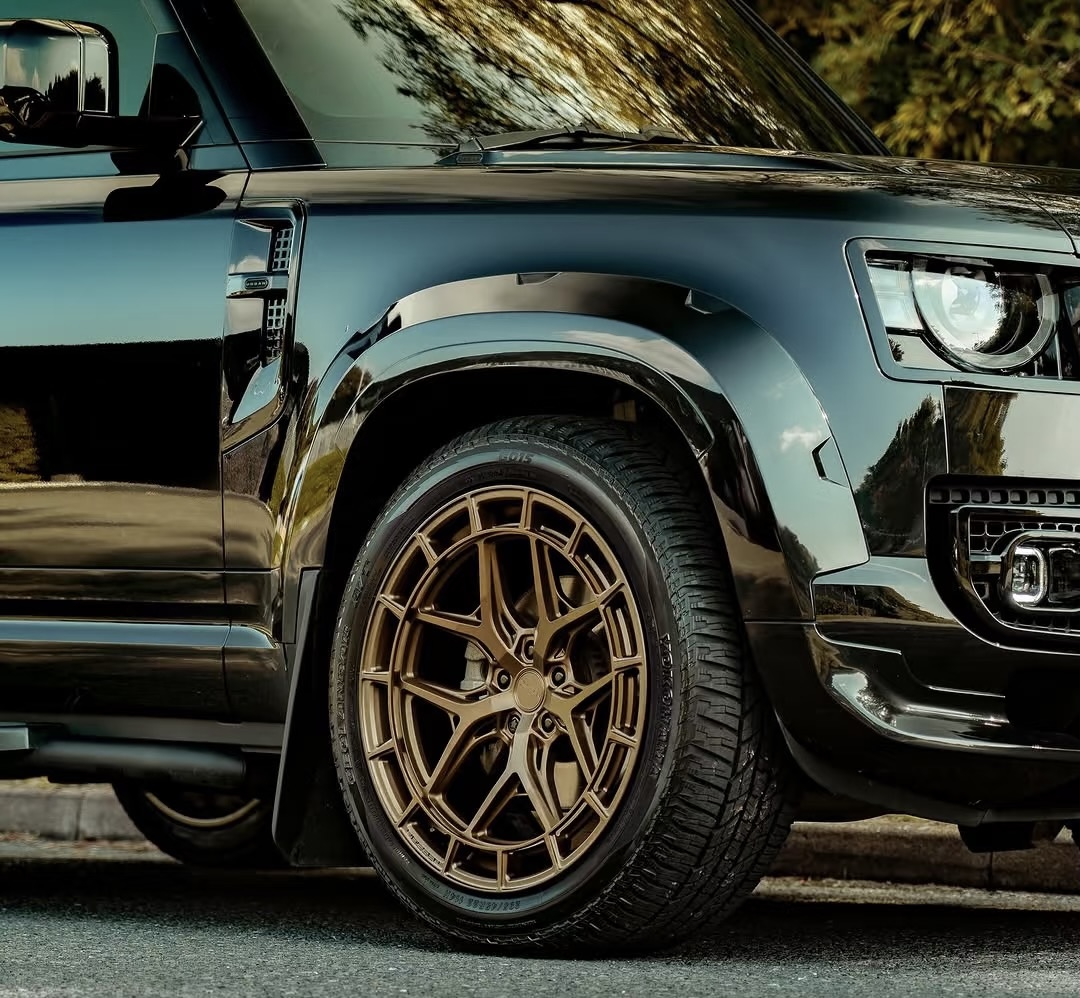
How Do You Measure Offset on Wheels?
How Do You Measure Offset on Wheels?
Whether you are upgrading your truck for a more aggressive stance, fitting wider tires on your sports car, or simply replacing a damaged rim, getting the right wheel fitment is crucial. One wrong calculation can lead to tires rubbing against your fenders, interference with your brake calipers, or ruined suspension components.
The most misunderstood part of this equation? Wheel offset.
If you are asking yourself, “How do you measure offset on wheels?” you are in the right place. While it sounds highly technical, measuring wheel offset is a straightforward process you can do right in your garage with a few basic tools.
In this comprehensive guide, we will break down exactly what wheel offset is, how to measure it step-by-step, and how to ensure your new setup fits perfectly without any rubbing.

What is Wheel Offset and Why Does It Matter?
Before grabbing your tape measure, it helps to understand what you are actually measuring.
Wheel offset is the distance from the exact centerline of the wheel to the hub mounting surface (where the wheel bolts onto your vehicle). Offset is always measured in millimeters (mm), even in the United States where tire and wheel widths are often discussed in inches.
Getting the offset right ensures that your wheel sits exactly where the vehicle manufacturer intended—or exactly where you want it to sit for a custom look. If the offset is wrong, you risk severe handling issues, premature tire wear, or catastrophic rubbing against internal suspension components.
The Three Types of Wheel Offset
To understand how to measure offset on rims, you must first understand the three distinct categories of offset:
-
Positive Offset: The hub mounting surface is positioned toward the front (street side) of the wheel’s centerline. This pulls the wheel inward toward the brakes and suspension.
-
Zero Offset: The hub mounting surface is perfectly even with the exact centerline of the wheel.
-
Negative Offset: The hub mounting surface is positioned toward the back (brake side) of the wheel’s centerline. This pushes the wheel outward, creating a deep-dish look or causing the tires to stick out past the fenders.
How to Measure Offset on Wheels: A Quick Featured Snippet Answer
How to Measure Wheel Offset in 4 Steps
Measure the Total Wheel Width: Lay the wheel flat on the ground and measure from the outer edge to the inner edge.
Calculate the Centerline: Divide the total wheel width by 2.
Measure the Backspacing: Lay a straightedge flat across the back edge of the rim and measure down to the hub mounting surface.
Subtract Centerline from Backspacing: Subtract the centerline measurement from the backspacing measurement. The resulting number is your wheel offset. (If backspacing is greater than centerline, it is positive; if it is less, it is negative).
Note: If your measurements are in inches, multiply the final number by 25.4 to convert it to millimeters.
Tools Needed to Measure Wheel Offset at Home
You don’t need expensive shop equipment to measure wheel offset. Just gather these common garage tools:
-
A tape measure or a standard ruler (ideally with both metric and imperial markings).
-
A straightedge (a rigid piece of wood, a metal ruler, or a level that spans the entire width of the tire/rim).
-
A flat, clean surface to work on (use a piece of cardboard or a towel to protect the face of your wheel from scratches).
-
A calculator.
Step-by-Step Guide: How to Calculate Wheel Offset Manually
Follow these exact steps to determine the offset of any bare wheel or wheel-and-tire combo.
Step 1: Measure the Total Wheel Width
Lay your wheel completely flat on the floor with the front face pointing down. Place your straightedge across the back lip of the wheel. Measure the total distance from the very bottom edge (touching the floor) to the top edge (where your straightedge sits).
Crucial Professional Tip: Do not confuse advertised wheel width with total wheel width. An advertised 9-inch wheel measures the distance where the tire beads sit. The physical, total edge-to-edge width of that wheel will actually be closer to 10 inches because of the outer lips. Always measure the physical edge-to-edge total width for this calculation.
Step 2: Find the Wheel Centerline
Once you have your total physical width, divide that number exactly by two. This gives you your wheel’s centerline.
-
Example: If your total edge-to-edge wheel width is 10 inches, your centerline is 5 inches.
Step 3: Measure the Backspacing
With the wheel still face-down on the ground and the straightedge resting across the back lip of the rim, slide your tape measure straight down to the hub mounting pad (the flat surface with the lug holes). Measure the exact distance from the bottom of the straightedge to that mounting surface. This measurement is your backspacing.
Step 4: Do the Math (Subtract Centerline from Backspacing)
To get your final offset, use the following simple formula:
-
If Backspacing is greater than Centerline: Your wheel has a Positive Offset.
-
If Backspacing is less than Centerline: Your wheel has a Negative Offset.
-
If Backspacing equals Centerline: Your wheel has a Zero Offset.
Step 5: Convert Inches to Millimeters
Because standard wheel offsets are always labeled in millimeters, you will need to convert your result if you used an inch tape measure. Multiply your final inch number by 25.4.
-
Example: If your result is +0.5 inches, multiply $0.5 \times 25.4 = +12.7\text{ mm}$ (typically rounded to a +12mm or +13mm offset).
Quick Conversion & Reference Guide
To make your life easier, use this quick reference table to understand how common inch measurements translate into millimeter offsets and how different configurations alter fitment.
| Measurement / Question | Millimeter Value (mm) | Inch Equivalent (in) | Visual Effect on Vehicle |
|---|---|---|---|
| 12 mm Offset | 12 mm | 0.47″ | Mild positive offset; pulls wheel slightly inward. |
| 18 mm Offset | 18 mm | 0.71″ | Common factory truck/SUV offset; clean, flush look. |
| 25 mm Offset | 25 mm | 0.98″ (~1 inch) | Moderate positive offset; deep inside fender well. |
| 2-Inch Wheel Spacer | Subtracts 50.8 mm | 2.00″ | Pushes the wheel drastically outward. |
The Shortcut: Where is the Offset Stamped on a Rim?
Before you break out the tape measure and do the math, you might be able to find the answer pre-printed on the wheel itself.
On many factory and aftermarket wheels, the offset is stamped directly into the aluminum on the backside of the wheel, near the mounting hub or on one of the inner spokes.
Look closely for the letters “ET” followed by a number. “ET” stands for Einpresstiefe, which is German for offset.
-
If you see ET35, that indicates a +35mm positive offset.
-
If you see ET-12, that indicates a -12mm negative offset.
If the stamp has worn away, rusted, or isn’t there, simply default back to the manual measurement steps outlined above.
Understanding Real-World Offset Meanings
When shopping for wheels, you will constantly encounter specific offset numbers. Let’s look at what the most common configurations mean for your vehicle’s stance and clearance.
What does +35 offset mean on a rim?
A positive offset, like +35, means the mounting pad is located 35mm forward from the true center of the wheel. This configuration pulls the wheel assembly further inside the fender wells. This is incredibly common on modern front-wheel-drive cars and modern crossover SUVs, keeping the steering geometry tight and preventing the tires from throwing road debris up the side of the car.
What does +15 offset mean on wheels?
A +15 offset keeps the mounting pad slightly forward of the centerline but moves it closer to the middle than a +35 wheel. If you swap a factory +35mm wheel for a +15mm wheel, the new wheel will stick out roughly 20mm (close to 0.8 inches) further than before. This is a popular option for truck owners who want a slightly wider stance without needing aggressive fender flares.
What happens when you add a 2-inch wheel spacer?
Adding wheel spacers alters your functional offset. A 2-inch spacer adds approximately -50.8mm of offset to your setup. Because spacers reduce the distance from the wheel center to the hub assembly, they subtract from your existing offset.
For example: If your aftermarket wheels feature a +45 offset and you bolt on a 2-inch (50.8mm) spacer, your new net functional offset is -5.8mm. This pushes your wheels dramatically outward, often requiring suspension lifts or fender trimming to avoid aggressive tire rub.
Pro-Tips for Changing Your Wheel Offset
When altering your vehicle’s factory stance with custom offsets from premium brands like ATK Wheels, keep these expert fitment considerations in mind:
-
Suspension Clearance: Higher positive offsets push the wheel inward. Ensure your tire won’t rub against your struts, control arms, or sway bars.
-
Brake Caliper Clearance: The shape of the wheel spokes (X-factor) paired with the offset dictates whether your wheels will clear heavy-duty aftermarket brake calipers.
-
Scrub Radius Alterations: Drastically changing your offset changes your car’s scrub radius. This can make your steering feel heavier, cause the vehicle to track tramlines in the road, or accelerate wear on wheel bearings.
-
The Golden Rule: Always do a dry test-fit of a new wheel on both the front and rear hubs before mounting tires. Once tires are mounted onto rims, most shops will not accept a return if the offset is incorrect!
Frequently Asked Questions (FAQ)
Can I measure wheel offset with the tire still mounted?
Yes, you can estimate it. Lay the tire/wheel assembly flat, place your straightedge across the widest part of the tire sidewall, and measure down to the hub. However, because tire sidewalls bulge, this method is slightly less accurate than measuring a bare rim. You must account for the tire bulge when calculating your total width.
Is backspacing the same thing as wheel offset?
No, but they are closely related. Backspacing is the absolute distance from the back edge of the rim to the mounting pad. Offset is the distance from the centerline of the wheel to the mounting pad. You use backspacing to calculate offset.
Will a negative offset ruin my wheel bearings?
Slight negative offsets are generally fine, but extreme negative offsets (like -44mm or -76mm found on deep-dish lifted truck setups) put significantly more leverage on your hub assembly. Over time, this extra stress can cause premature wear on your wheel bearings, ball joints, and tie rods.
Need the Perfect Stance? Explore Premium Wheels Today
Now that you know exactly how to measure offset on wheels, you are fully equipped to pick out a set of custom wheels that will fit your ride perfectly. Upgrading your wheels shouldn’t involve guesswork.
If you are ready to ditch your boring stock look for a pristine, perfectly engineered setup, check out the latest styles and fitments available at ATK Wheels. Find your aggressive offset, choose your finish, and transform your vehicle’s stance today!