
Custom Aftermarket Rims: How to Choose the Right Wheels for Your Car
Custom Aftermarket Rims: How to Choose the Right Wheels for Your Car
When you walk past a parked car, what catches your eye first? Nine times out of ten, it’s the stance and the set of wheels holding up the chassis. Standard factory wheels—often referred to as Original Equipment Manufacturer (OEM) wheels—are designed to satisfy mass-market compromises. They are built for low production costs, generalized comfort, and high ground clearance across various climate conditions.
Upgrading to custom aftermarket rims allows drivers to break away from factory limitations. Whether you want to achieve flush fender fitment, fit larger high-performance brake calipers, drop rotational weight for track days, or give your ride an aggressive profile, aftermarket wheel engineering makes it possible.
Understanding the balance between construction quality, dimensional fitment, and load capacities is essential before making an investment. This comprehensive analysis breaks down everything you need to know about selecting, configuring, and installing custom aftermarket rims.
1.What Are Custom Aftermarket Rims?
Custom aftermarket rims are non-factory wheels engineered by specialized third-party manufacturers. Unlike standard assembly-line wheels, aftermarket rims provide personalized options in diameter, width, offset, bolt pattern, finish, and structural construction.
While OEM wheels focus on broad durability and economic mass production, custom aftermarket options focus on targeted driver goals:
-
Aesthetic Distinction: Endless colorways including bronze, satin black, brushed clear, polished lips, and dual-tone finishes.
-
Dimensional Tailoring: Custom widths and offsets engineered specifically for stance setups, widebody kits, or tucking underneath stock fenders.
-
Performance Optimization: Reduced unsprung weight that sharpens steering response and lowers rotational inertia.
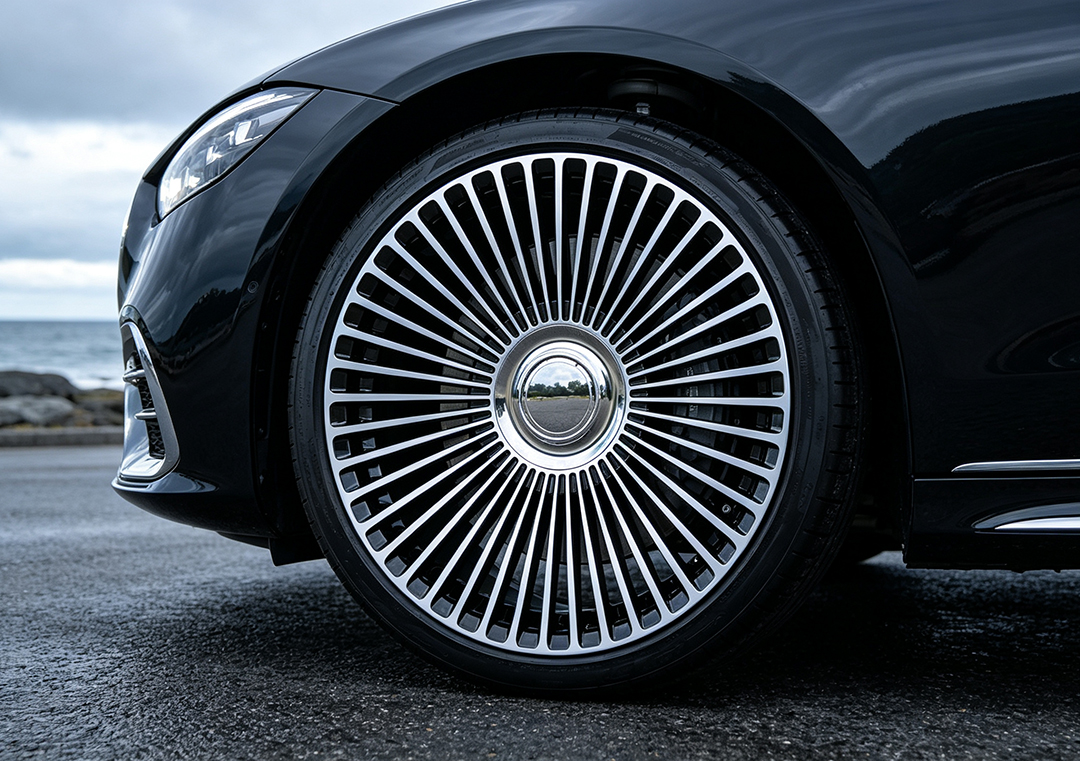
2.Manufacturing Methods: Cast vs. Flow-Formed vs. Forged Rims
The way a wheel is built directly dictates its structural strength, total weight, impact resistance, and price point. Understanding these three primary manufacturing technologies is essential for choosing the right setup.
1. Cast Aluminum Wheels
Casting is the most widespread manufacturing method across both OEM and entry-level aftermarket markets.
-
Gravity Casting: Molten aluminum is poured into a mold, relying solely on gravity to fill the cavity. It is economical but can harbor microscopic air pockets, requiring thicker walls to maintain structural integrity.
-
Low-Pressure Casting: Liquid metal is pushed into the mold under pressure from below. This reduces porosity, producing a denser, stronger rim face than gravity casting while keeping production costs low.
2. Flow-Formed (Flow-Forged) Wheels
Flow-forming is a hybrid technique that bridges the gap between casting and true forging. The process starts with a low-pressure cast preform. High-speed hydraulic rollers then stretch and compress the aluminum barrel over a steel mandrel while applying continuous heat.
This mechanical compression realigns the aluminum’s grain structure horizontally along the barrel, delivering thin, strong walls similar to forged wheels at a fraction of the cost.
3. Forged T6-6061 Aluminum Wheels
Forged wheels represent the pinnacle of wheel engineering. Instead of melting aluminum down to a liquid, forging starts with a solid billet of aerospace-grade 6061-T6 aluminum.
The billet is subjected to immense pressure, forcing the metal into shape without breaking its molecular grain flow. CNC milling machines then carve out intricate spoke designs. The result is a light, exceptionally strong wheel capable of withstanding extreme track stress and heavy impacts.
Manufacturing Comparison Table
| Feature / Metric | Cast Rims | Flow-Formed Rims | Forged Rims |
|---|---|---|---|
| Production Method | Pouring liquid aluminum into molds | Stretching cast barrel over mandrel under pressure | High-pressure forging of solid T6-6061 billet |
| Grain Structure | Porous, non-directional | Compacted grain structure along barrel | Continuous, ultra-dense linear grain structure |
| Weight | Moderate to Heavy | Lightweight (15–20% lighter than cast) | Ultra-Lightweight (25–35% lighter than cast) |
| Impact Strength | Baseline / Rigid | High barrel strength | Exceptional impact & tensile resistance |
| Customization | Fixed cast molds | Pre-cast faces with custom offsets/PCDs | 100% custom offsets, widths, PCDs, & backspacing |
| Price Point | Budget-Friendly | Mid-Range Performance/Premium High-End |
3.Essential Wheel Fitment Specifications Explained
Installing custom aftermarket rims requires precise dimensional math. Getting any of these five core parameters wrong can lead to tire rubbing, brake caliper interference, strut tower contact, or unsafe vibrations.
1. Bolt Pattern (PCD – Pitch Circle Diameter)
The Pitch Circle Diameter indicates the number of lug holes and the diameter of the imaginary circle they form.
-
Example:
5x112means 5 lug holes arranged on a 112mm diameter circle (common on European performance sedans). -
Example:
5x114.3is a popular Japanese and American vehicle pattern.
2. Wheel Offset (ET)
Measured in millimeters, offset is the distance from the wheel’s true centerline to its mounting hub surface.
-
Positive Offset (+ET): The mounting hub sits toward the front face. Wheels tuck inward toward the suspension (standard on modern front-wheel-drive and all-wheel-drive cars).
-
Zero Offset (ET0): The mounting surface aligns perfectly with the center line.
-
Negative Offset (-ET): The hub surface sits deeper toward the back of the wheel. This creates a deep-lip look that pushes the rim outward beyond the fender well (common on lifted trucks and aggressive stance cars).
3. Center Bore and Hub-Centric Rings
The center bore is the machined hole on the back of the rim that slides onto the vehicle’s axle hub.
-
Hub-Centric Fitment: The rim’s center bore matches the vehicle’s hub diameter exactly, centering the wheel on the hub rather than relying solely on the lug studs.
-
Lug-Centric Fitment: The rim’s center bore is larger than the hub diameter (often done by aftermarket brands to fit multiple vehicle models). If there is a gap, you must install hub-centric adapter rings to prevent wheel wobble and high-speed vibrations.
4. Backspacing
Backspacing measures the distance from the rear mounting surface to the inside lip of the rim. It determines how much clearance exists between the back of the wheel and your vehicle’s inner strut, shock tower, or brake lines.
5. Load Rating and Safety Certifications
Never install a wheel with a load rating lower than half of your vehicle’s heaviest axle rating. Look for independent international safety testing standard stamps stamped onto the wheel structure, such as JWL, VIA, or TÜV certifications.
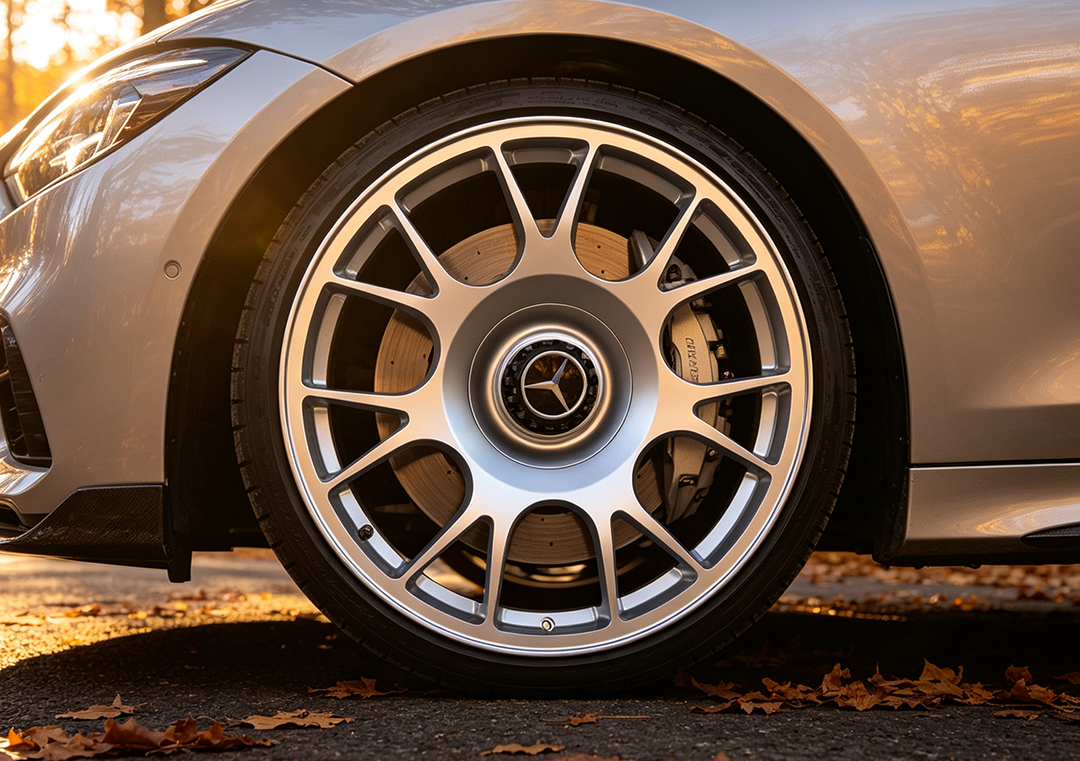
4.Performance Benefits: Unsprung Mass & Dynamics
Upgrading to lightweight custom aftermarket rims delivers real-world performance advantages beyond enhanced curb appeal.
Understanding Unsprung Mass
Unsprung mass includes all vehicle components situated below the suspension springs—such as wheels, tires, brake rotors, and hub assemblies. Unsprung components must closely follow the contours of the road.
When a heavy OEM wheel hits a bump, its momentum pushes hard against the suspension spring and damper. Replacing a heavy cast OEM wheel with a lightweight flow-formed or forged aftermarket rim reduces unsprung weight significantly per corner.
This reduction delivers four main dynamic advantages:
-
Sharper Suspension Recovery: The shock absorbers control lighter assemblies with far less resistance, keeping the tire contact patch firmly planted over rough surfaces.
-
Quicker Throttle & Braking Response: Reducing rotational inertia lets your drivetrain spin the wheels up—and bring them to a stop—with less effort.
-
Enhanced Steering Feel: Lighter wheels lower gyroscopic forces, improving turn-in agility through tight corners.
-
Improved Fuel Efficiency: Lowering rotational mass reduces the engine work required during city stop-and-go driving.
5.Custom Finishes, Styles, and Stance Setup Options
Aftermarket wheels give drivers full creative control over their vehicle’s finish and stance.
Popular Wheel Face Styles
-
Deep Concave: Spokes curve inward from the outer barrel down toward the center lug area, creating a wide, aggressive profile.
-
Classic Mesh: Interlocking Y-spoke configurations that distribute load evenly while maintaining a timeless motorsport design.
-
Multi-Spoke: Clean 10-spoke or 12-spoke layouts that maximize airflow around performance brake calipers.
-
Modular 2-Piece / 3-Piece: Constructed from separate forged faces, spun barrels, and outer lips held together by assembly hardware. This build allows for wide customization in widths and offset measurements.
Durable Surface Finishes
-
Powder Coating: An electrostatically applied dry powder cured under high heat. It offers superior chip resistance against gravel and road debris compared to liquid paint.
-
Anodized Finishes: Chemical treatments that color the outer aluminum layer while preserving a metallic sheen.
-
Brushed Clear & Polished Lips: Hand-brushed aluminum directional graining sealed under a clear gloss coat to accentuate the metalwork.
6.Step-by-Step Installation & Maintenance Protocol
Installing custom aftermarket rims involves more than simply tightening lug nuts. Following a methodical process protects your investment and ensures highway safety.
Step 1: Perform a Dry Pre-Fit Check
Before mounting tires onto your new rims, slide a bare wheel onto the front and rear hubs by hand:
-
Verify that the wheel flush-mounts against the brake rotor face without catching on the caliper.
-
Spin the wheel to confirm full clearance around inner suspension components, tie rods, and sway bar links.
-
Confirm the center bore slides smoothly over the hub (install hub-centric rings if needed).
Step 2: Use Touchless Mounting and Road Force Balancing
-
Have an experienced shop mount tires using touchless mounting equipment to prevent scratching the lip finish.
-
Request Road Force Balancing, which applies a hydraulic roller against the tire during spinning to detect internal stiffness variations and match-mount the assembly correctly.
Step 3: Install Correct Lug Hardware
-
Lug Seat Matching: Never use stock flat-washer or mag-seat lug nuts on aftermarket wheels designed for 60-degree conical (tapered) or ball seats. Using improper lug seats can loosen hardware or strip mounting holes.
-
Hand-Torque in a Star Pattern: Avoid using high-torque air impact wrenches for final tightening. Tighten hardware by hand with a calibrated torque wrench in a cross-star pattern according to factory torque specs. Re-torque after driving the first 50–100 miles.
Frequently Asked Questions (FAQ)
1. What are custom aftermarket rims?
Custom aftermarket rims are wheels built by specialized third-party manufacturers. They provide personalized designs, custom dimensions, unique color finishes, and specific fitment specs that go beyond stock OEM factory wheels.
2. How do I choose the right custom aftermarket rims for my car?
Match five key dimensional parameters: diameter, width, bolt pattern (PCD), offset (ET), and center bore diameter. You also need to confirm that the wheel load rating matches your vehicle’s axle weight and provides enough clearance for your brake calipers.
3. Are custom aftermarket rims safe for daily driving?
Yes. As long as the rims carry structural safety certifications (such as JWL, VIA, or TÜV), meet your vehicle’s load ratings, use hub-centric rings when needed, and are installed with the correct lug hardware, they are completely safe for everyday road use.
4. Can I customize the size and finish of aftermarket rims?
Yes. Many manufacturers offer a wide selection of diameters, barrel widths, offsets, lip depth options, and surface finishes ranging from powder-coated colors to brushed metallic and anodized tones.
5. Are custom aftermarket rims better than OEM rims?
Not always. Custom aftermarket rims offer much greater design flexibility, lighter weight choices, and tailored stance fitments. Stock OEM rims are designed purely around general factory specifications. Choosing between them comes down to your personal performance goals, budget, aesthetic preferences, and fitment needs.
Transforming Your Drive with Precision Fitment
Investing in a set of custom aftermarket rims is one of the most impactful upgrades you can make to your vehicle. The key to a successful build lies in balancing visual design with precise wheel geometry.
By calculating your offsets, choosing high-quality manufacturing processes like flow-forming or forging, and utilizing proper hub-centric mounting hardware, you can achieve an ideal stance while enjoying sharper handling and reduced unsprung weight on every drive.
Ready to Upgrade Your Vehicle’s Stance?
Looking for engineered fitments designed specifically for your build? Explore the wheel collections, custom finishes, and vehicle application lists available at ATK Wheels to find your next setup.

